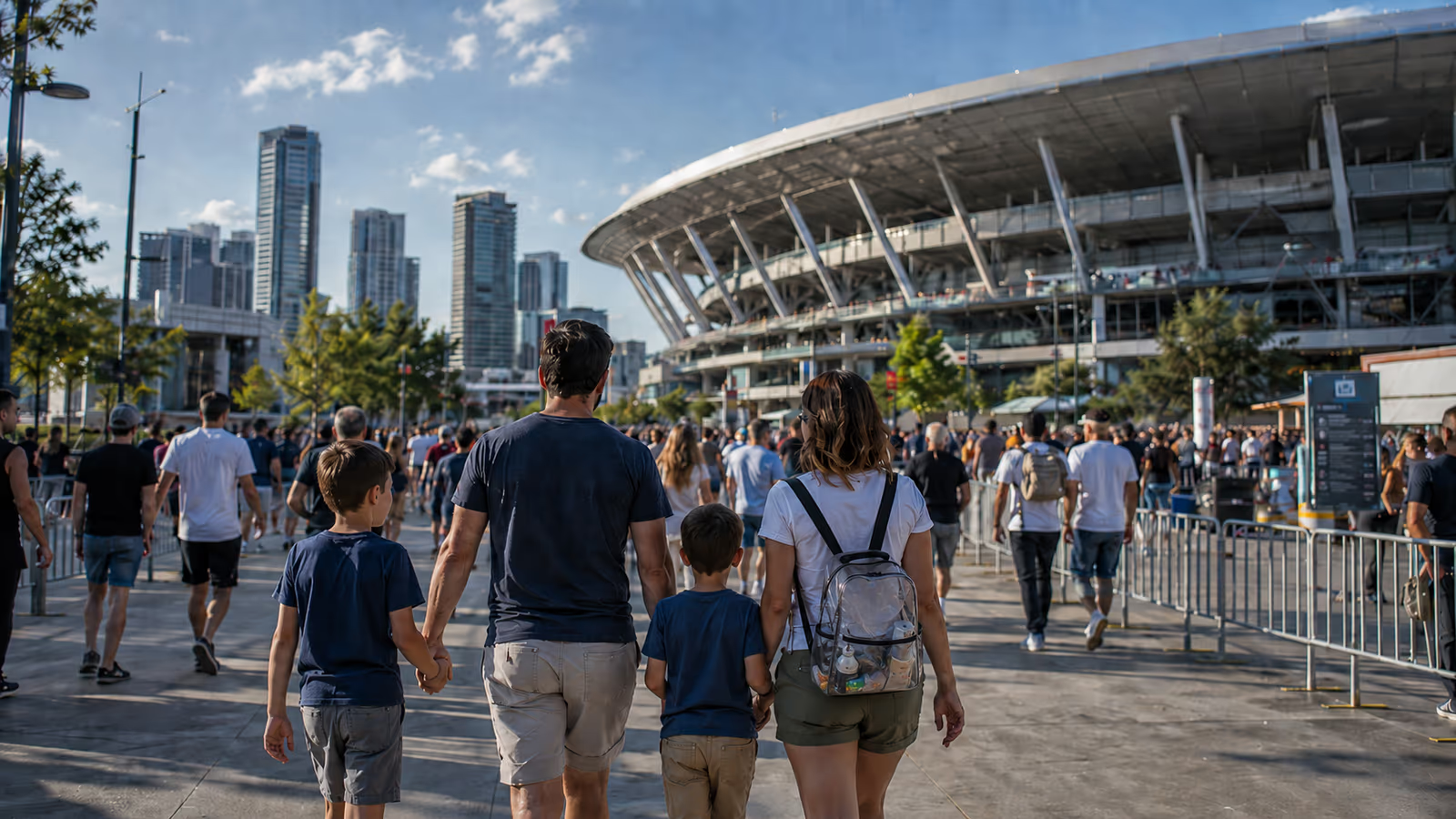
The match ticket is the easy part. The family logistics are the trip.
World Cup 2026 is massive: multiple countries, huge stadiums, busy host cities, and families traveling for an event they may only see once. If you are taking kids, the question is not just "can we get there?" It is whether the day has enough structure to survive crowds, heat, entry rules, food lines, restroom breaks, and the long walk out after the final whistle.
This guide is the parent layer: what to decide before matchday, what to verify from official sources, and what to leave open enough that the day can still breathe.
Last updated: June 11, 2026. Matchday rules can change quickly. Verify ticket, bag, bottle, transit, stadium-entry, and fan-zone details from official FIFA, host-city, stadium, and transit sources before leaving your lodging.
The short version
For families, the best World Cup matchday plan has one main event, one backup reset option, and a clear exit plan.
Do not stack the day like adults are traveling alone. A stadium match plus a Fan Festival plus a late dinner plus a long transit exit might look efficient on paper. With kids, it can become the part everyone remembers for the wrong reason.
The better move:
- Pick the match or Fan Festival as the day's anchor.
- Arrive earlier than feels necessary.
- Verify bag and bottle rules the morning of the match.
- Feed kids before security, not only after.
- Choose a post-match meeting point and exit route before kickoff.
- Leave room for one unscripted moment.
For a more tactical version, use the World Cup 2026 matchday checklist with kids. If timing is the question, use how early families should arrive at a World Cup match. If you are deciding between a fan event and the stadium, use Fan Festival vs. stadium with kids. If your route includes one of our first family match cities, use the Kansas City guide or Seattle guide next.
What families should verify before leaving
Use official sources for operational details. Social posts and old articles are not enough.
- Tickets: official FIFA ticket path and account login. Seattle's host-city site is blunt about this: buy tickets from FIFA and avoid fake secondary-market tickets.
- Entry: gate, mobile-ticket requirements, bag size, prohibited items.
- Water: sealed bottle, empty bottle, refill station, or no-bottle rules by venue.
- Transit: host-city shuttles, rail service, road closures, rideshare zones.
- Weather: heat, rain, shade, sunscreen, layers.
- Fan zones: entry pass, hours, capacity, family activities, food, bathrooms.
- Accessibility: sensory, mobility, audio description, and family restroom options.
Good starting points:
How early should families arrive?
For a normal sporting event, families can sometimes cut timing close. This is not that.
World Cup crowds are a different rhythm: more visitors, more unfamiliarity, more people using transit for the first time, more photo stops, and more security questions at the gate. Plan to reach the stadium district several hours before kickoff, then use the extra time as a buffer rather than a burden.
A practical family timing model:
- 4-5 hours before kickoff: leave lodging if transit or parking is uncertain.
- 3 hours before kickoff: aim to be near the stadium district or fan area.
- 2 hours before kickoff: be through the biggest uncertainty: parking, rail arrival, shuttle drop, or first security perimeter.
- 60-90 minutes before kickoff: be inside or near your gate unless official guidance says otherwise.
That may sound early. It is still better than teaching tired kids patience in a stalled entry line while the anthem starts.
For the full timing breakdown, see how early families should arrive at a World Cup match.
Fan Festival vs. stadium: the family decision
The stadium is the memory. The Fan Festival may be the easier family day.
A stadium match gives kids the scale: the walkout, the anthem, the crowd, the field, the moment when the whole building reacts at once. But it also brings stricter entry, assigned seats, long concourse lines, and a crowd that leaves together.
A Fan Festival can be looser. Kids can move around, food options may be broader, and the cost can be lower. But free does not mean frictionless. Capacity, heat, entry lines, bathrooms, and exit routes still matter.
Kansas City's Fan Festival is a good example. The official page lists the National WWI Museum and Memorial as the location and says free General Admission passes are first-come, first-served and subject to capacity. The same page says capacity is limited to 25,000 and that a digital pass does not guarantee entry if the site is full.
Use this rule: if the match is the anchor, keep the rest of the day light. If the Fan Festival is the anchor, treat it as a real event and plan around it.
For the deeper decision guide, see Fan Festival vs. stadium: which is better for families?.
What to pack
Pack for the rules first, comfort second.
Do not assume normal daypack logic works. Each stadium can have its own bag, bottle, umbrella, stroller, camera, and food restrictions. Verify the official policy and then pack smaller than you want to.
Family basics to consider:
- Mobile tickets, a portable power bank, and a charging cable.
- IDs/passports if needed for travel day, kept secure.
- One small rule-compliant bag. If your venue requires or strongly favors clear bags, compare clear stadium bags and choose the smallest option that fits the published policy.
- Kid snacks before the security perimeter.
- Sunscreen applied before leaving; a sunscreen stick is easier than a full bottle if your venue allows it.
- Hats or light layers depending on city. For hot afternoon plans, a cooling towel can help without taking much room.
- Kids' noise-cancelling headphones for younger kids if they are sensitive to crowd noise.
- A collapsible refillable water bottle for airports, hotels, transit, and walking days. Bring it to the stadium only if the current bottle policy allows it.
- A written meeting point.
- A transit backup plan.
A foldable daypack can help on travel days or at the Fan Festival. Do not count on it for stadium entry unless the official bag rules say it fits.
For a tighter packing scan, use the matchday checklist. Keep this guide focused on the decision layer and let the checklist handle the last check before you leave.
Stay near the route, not just the stadium
If you are still choosing lodging, pick for the exit route instead of the stadium pin. For the first two city guides we are building, compare Seattle stays or Kansas City stays by transit access, cancellation rules, and how you will get back after the match.
For non-match days, attraction passes belong on recovery days and arrival days, not kickoff days. Check Seattle CityPASS if your Seattle plan already includes the big attractions. CityPASS also has passes for World Cup routes through Atlanta, Boston, Dallas, Houston, New York, Philadelphia, San Francisco, Toronto, and Southern California. Compare the pass only after you know which attractions your family wants.
Some product and booking links may earn Level Up Adventures a commission. Buy nothing until it fits your itinerary and the official matchday rules.
The post-match exit matters
A lot of family plans end at kickoff. They should end one hour after the final whistle.
The exit is where tired kids, hungry adults, dead phones, closed streets, and crowds all show up at once. Before the match starts, decide:
- Are we leaving immediately or waiting 20-30 minutes?
- Which transit station or pickup area are we using?
- Where do we meet if separated?
- What is our food/reset plan after the match?
- What is the backup if the first route is overloaded?
The family that knows how it is leaving will have a better match.
City guides we are updating first
We started with Kansas City and Seattle because those are the two match cities we are attending as a family.
The Kansas City guide covers Argentina matchday, ConnectKC26, the Fan Festival, summer heat, and late-night exits. The Seattle guide covers Team USA matchday, Sound Transit, Seattle Soccer House, noon kickoff timing, and non-match-day add-ons like CityPASS.
Editorial note
This is an independent family-travel guide from Level Up Adventures. It is not an official FIFA, host-city, team, stadium, or ticketing guide. Verify current rules, ticketing, schedule, transit, security, and accessibility details with the official sources before booking or leaving for the match.
Frequently asked
Is World Cup 2026 worth doing with kids?
Yes, if you treat the match as one part of the day instead of the whole plan. Families should plan arrival, food, water, bag rules, transit, and post-match exits before matchday.
How early should families arrive for a World Cup match?
Families should plan to reach the stadium area several hours before kickoff, then adjust based on official host-city transit guidance, stadium entry rules, heat, and kid stamina. Verify the official matchday guidance before leaving.
Should families go to the Fan Festival or the stadium?
The stadium is the once-in-a-generation memory, but the Fan Festival can be easier and cheaper for families. Free fan events can still have capacity, entry, heat, bathroom, and food-line friction.
Continue reading
Kids Get 25% Off Xcaret Parks This Summer
Xcaret's running a summer deal that cuts 25% off park and tour tickets for kids, with the discount running through January. It isn't the only family deal worth grabbing this week.
Knott's Berry Farm Is Running Almost Empty This Week
Knott's Berry Farm is posting 6-minute average waits across 32 open rides, less than half the network average of 16 minutes. If your schedule flexes this week, that's a rare opportunity to ride nearly everything without burning a full day.
Kids Stay Free at Hotel Xcaret This Summer
Hotel Xcaret is offering free stays for children and teens through September, making it one of the strongest family deals of the season. It isn't the only family bargain worth grabbing this week.